
Attractions
Silent disco for venues, events and corporate nights

Oct
A room full of people dancing to music you cannot hear is strange to watch for exactly one minute. Then someone hands you a headphone and you understand. Silent disco solves real problems for venues and planners, and it happens to be a lot of fun.
Why venues and planners love it
Noise rules are tightening in many Indian cities, and residential neighbours rarely share your enthusiasm for a 1 am bass drop. With wireless headphones, the music goes into ears instead of across the boundary wall. Events can run later, in more locations, with far fewer complaints.
It also fixes the age-group problem. At weddings and family functions, elders want Bollywood classics, cousins want the latest hits and someone always asks for Punjabi. A silent disco runs multiple channels at once, and guests switch with a button. Everyone is happy, and nobody has to argue with the DJ.
- Noise control: music stays inside the headphones, ideal for rooftops, lawns and heritage venues.
- Multiple channels: typically two or three, each with its own DJ, playlist or language.
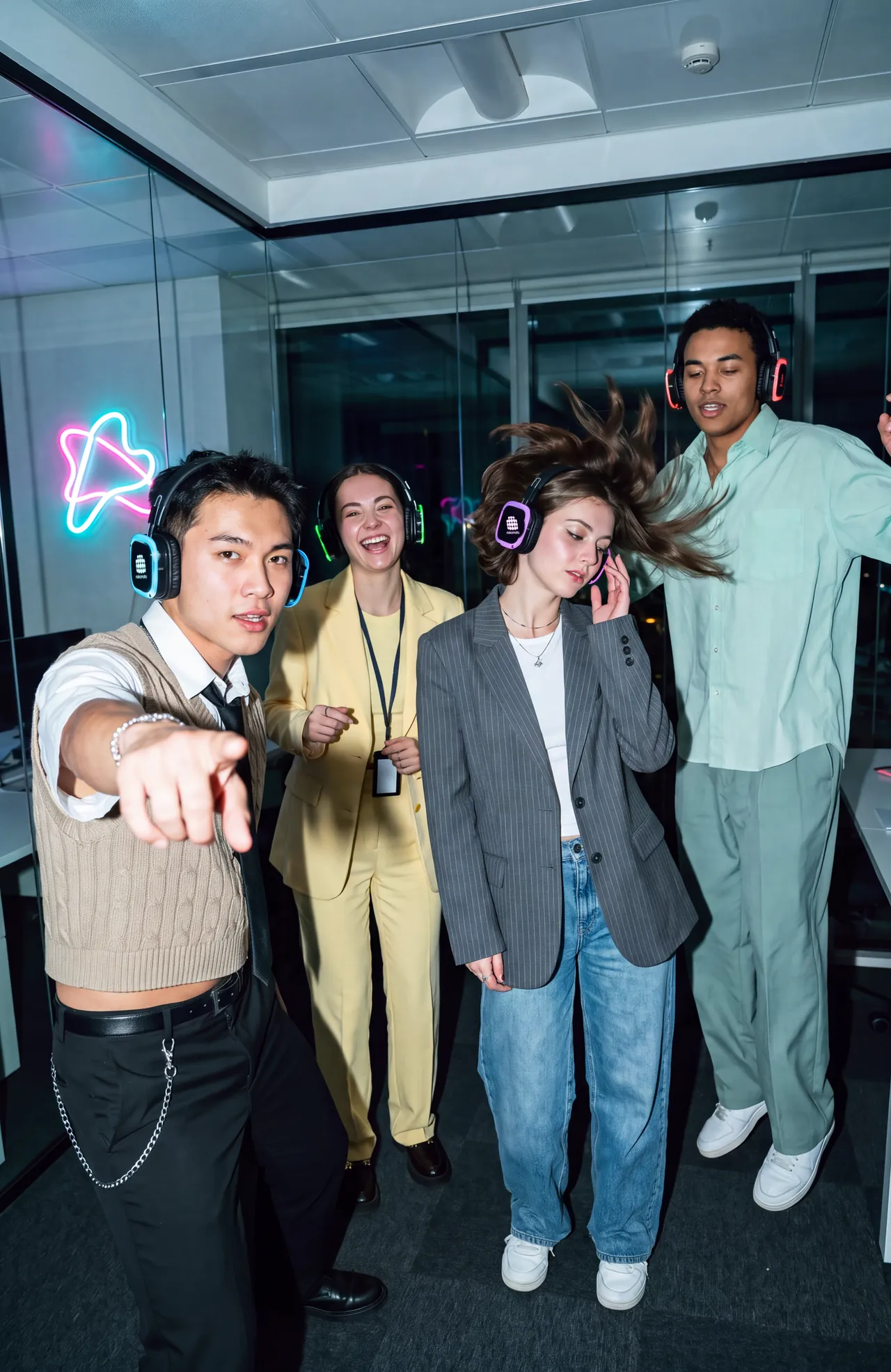
- Engagement: headphone LEDs change colour by channel, so the crowd itself becomes the light show.

Formats that work
Weddings and sangeets
Use silent disco for the after-party when the main sound system must shut down. Assign channels by music taste and let the family sort itself out.
Corporate offsites and team nights
Silent disco breaks the ice faster than any team-building game. Some companies run a silent quiz or a guided meditation on one channel and music on another. It also works for silent conferences, where several talks run side by side in one hall.
Festivals, malls and resorts
Malls host weekend silent disco nights in atriums without disturbing shops. Resorts run poolside sessions after quiet hours. Festivals use a silent stage to keep the party going after the main stage closes.
Equipment and set-up
A silent disco kit is simple: one transmitter per channel, a stock of wireless headphones and charging racks. Plan headphone numbers around peak attendance rather than total guests, since not everyone dances at once. A buffer of spare units covers late arrivals and the inevitable dead battery.
- Confirm guest numbers, channels and DJ line-up.
- Charge every headphone fully the day before and test each channel.
- Set up a distribution desk with a simple deposit or ID exchange.
- Position transmitters with a clear line to the dance area.
Running the night
The distribution desk is the heart of the operation. A smooth handover with a deposit, ID card or wristband keeps losses low. Have staff explain the channel button and volume control in ten seconds flat. Hygiene matters, so wipe ear pads between uses and offer disposable covers if possible.
At the end, collect headphones before guests reach the exit, not after. People are surprisingly attached to a good pair of headphones at 2 am.
The quietest party in the building is often the one people talk about loudest the next day.
Put the most popular music on the channel whose LED colour photographs best. The crowd will glow in that colour, and your event photos will look like you planned it that way.
Rent or buy?
Event planners running a few shows a year usually rent. Venues, resorts and event companies running regular nights find that owning a kit pays off over time and creates a new revenue line. If you are deciding, talk to our project team for a straight answer on kit size.
FAQ
How many headphones do we need?
Plan for peak dance-floor numbers plus a buffer of spares. For a mixed event, that is usually fewer than total guests. We can help size the kit.
Can people talk while wearing them?
Yes. Guests slip one earcup off, chat and slip it back on. Many find that easier than shouting over a speaker.
Is silent disco only for young crowds?
Not at all. With the right channels, grandparents and teenagers dance on the same floor to different songs. It is one of the most inclusive formats we know.
Planning something like this?
Talk to us on WhatsApp


