
Attractions
Building a water-sports fleet for lakes: kayaks, banana boats and aqua bikes
Oct
A lake without activities is scenery. Add the right boats and it becomes a revenue centre. The trick is building a fleet that suits your water, your crowd and your staff, rather than buying one of everything and hoping.
Start with the water, not the catalogue
Every water body has its own personality. A small resort lake suits paddle boats and kayaks. A large reservoir can handle towed rides behind a speedboat. Backwaters and calm coastal stretches open up more options again. Before choosing equipment, map out depth, usable area, seasonal level changes, weed growth and any local rules on motorised craft.
Then think about your visitors. Families with young children want calm, stable rides. College groups want speed and splashes. Couples want a quiet paddle at sunset. A balanced fleet serves all three.
The three tiers of a lake fleet
Calm: kayaks, pedal boats and aqua bikes
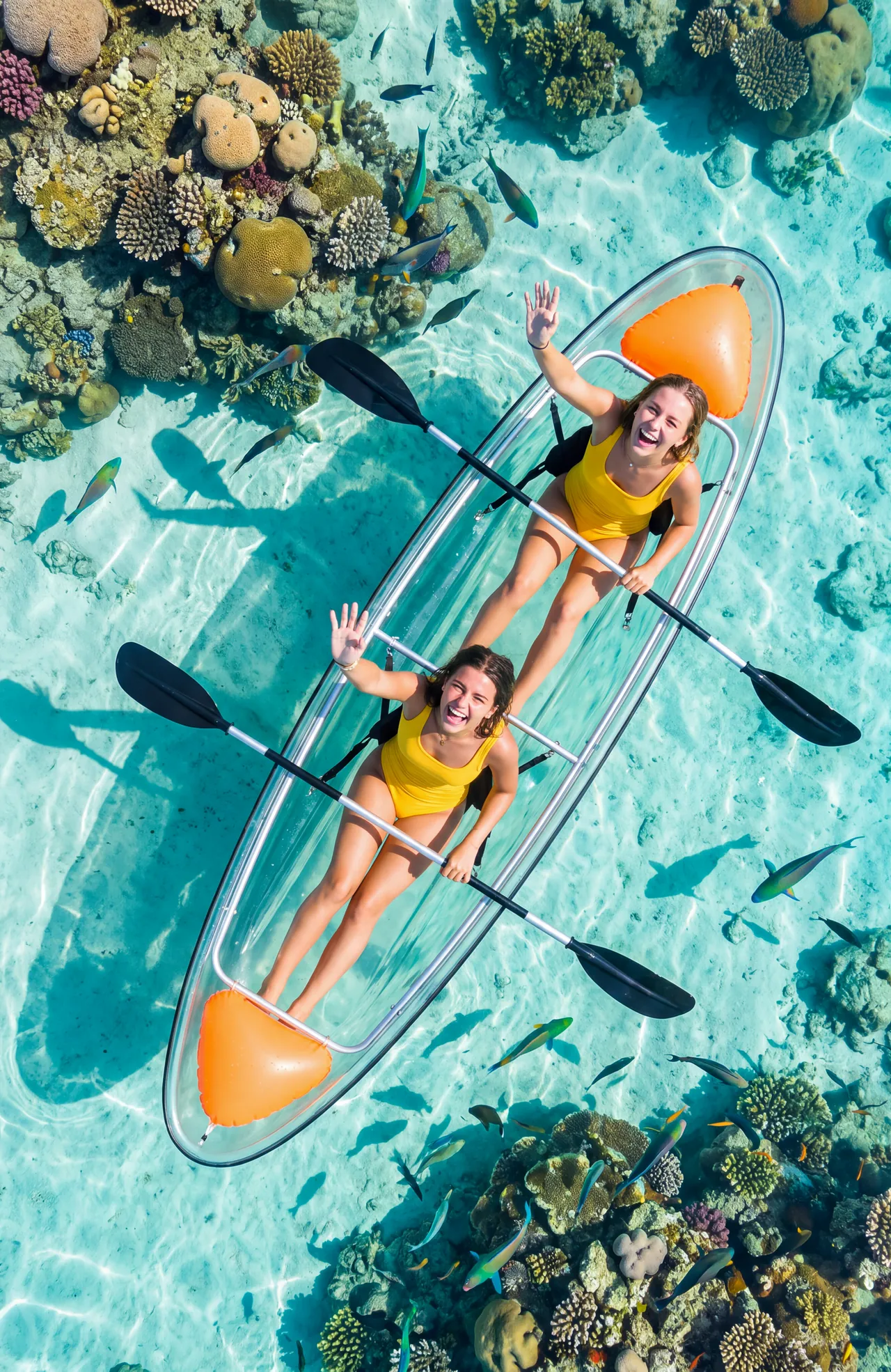
These are the backbone. They need no engine, little training and almost no fuel. Single and double kayaks suit active guests. Clear kayaks let you see the water below, which is a strong photo hook. Aqua bikes and aqua tricycles feel like cycling on water and are easy for first-timers.
Social: rafts and group boats
Mariner rafts, donut boats and BBQ boats turn a ride into a gathering. Families and friends stay together, spend longer on the water and order more. A floating barbecue on a quiet evening is a very easy sell.
Thrill: towed inflatables
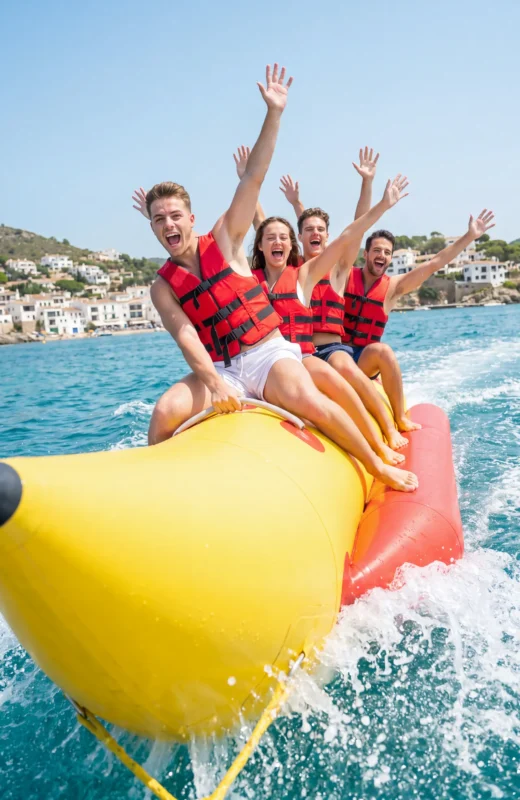
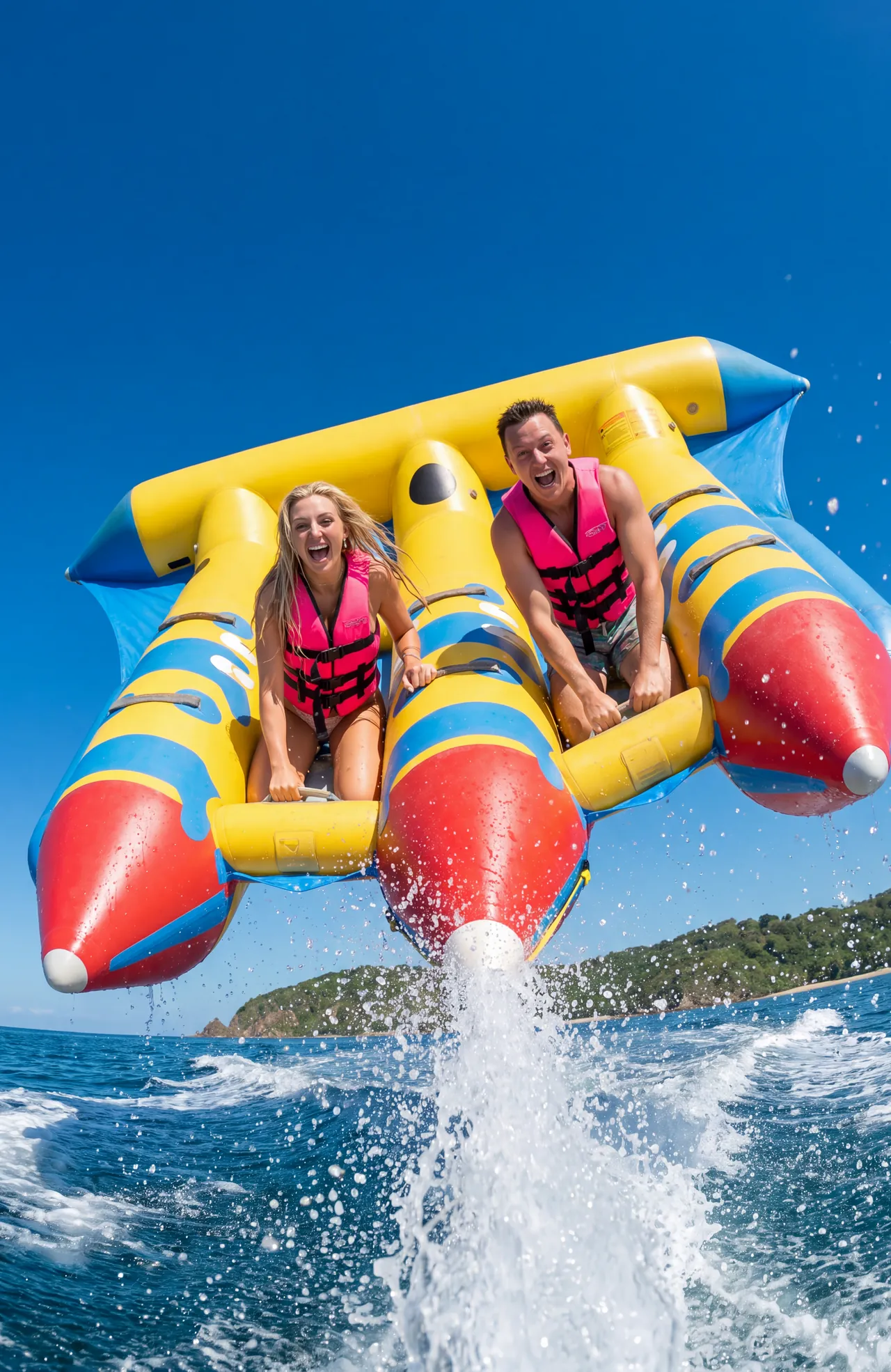
Banana boats, flying bananas and similar towed rides are the crowd-pullers. They need a powered tow boat, a licensed and trained driver, a spotter and a clear zone well away from paddlers. They also generate the most noise, laughter and social media posts.
Safety and staffing
Life jackets are non-negotiable for every rider on every craft. Beyond that, plan a launch jetty or ramp, a rescue boat on standby, a lifeguard or two depending on lake size and clearly marked zones for paddled and towed craft. Weather rules matter too: wind, lightning and monsoon inflows can change conditions quickly.
Staff training is where most fleets win or lose. Teach the team to fit life jackets correctly, brief riders in under a minute, watch the water constantly and handle a capsize calmly.
A fleet is only as good as the person on the jetty fitting life jackets at four in the afternoon.
Maintenance and storage
Sun, water and sand are hard on equipment. Rinse craft after use, especially in brackish or salty water. Store inflatables out of direct sunlight and check them for abrasion. Keep a parts stock for pedals, paddles and valves, and service tow-boat engines on schedule.
Off-season is not downtime. It is the window for repairs, repainting and staff retraining before the rush.
- Inspect every craft before the first ride of the day.
- Log any damage and take the craft out of service until fixed.
- Rinse, dry and store properly at the end of the day.
Start smaller than you think, with a balanced mix, and add craft based on what actually sells out. Your guests will tell you within a season whether you need more kayaks or another banana boat.
Pricing and packages
Most operators sell per ride or per time slot, with combo tickets for two or three activities. Corporate groups and schools prefer half-day packages. Compare craft types in our attractions catalogue to plan your first fleet.
FAQ
Do we need permission to run boats on a lake?
Usually yes, especially for motorised craft. Requirements vary by state and water body, so check with local authorities early.
Which craft give the fastest return?
In our experience, low-maintenance calm craft like kayaks and aqua bikes earn steadily, while towed rides earn more per hour but need more staff and fuel.
Can children use the fleet?
Yes, on suitable craft with life jackets and an adult where required. Set clear age and weight rules for each ride.
Planning something like this?
Talk to us on WhatsApp


